
QCC — Quality Commercial Cleaning
Helpdesk · live · operators on shift
24/7 Rapid Response — QCC's emergency cleaning service line

24/7 Rapid Response — Real people pick up. First ring. Day or night.

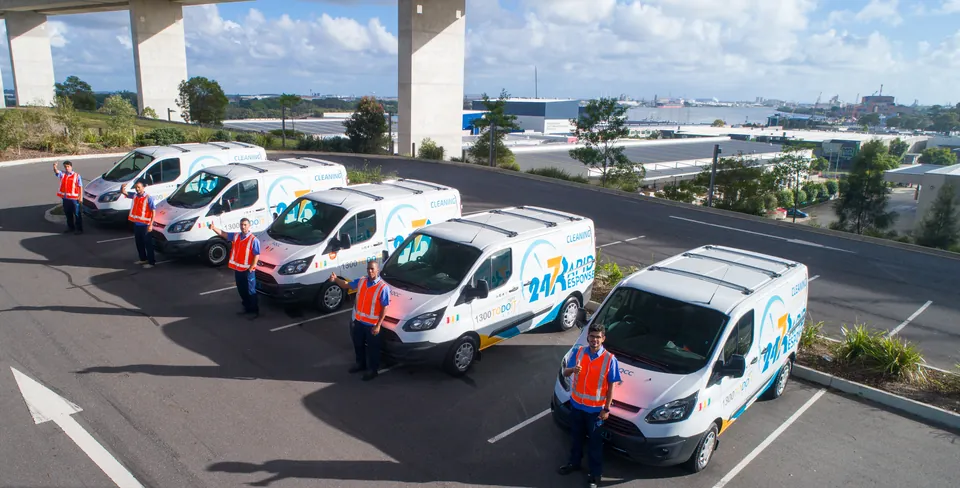
Most cleaning companies say "24/7 service." When you actually call at 3 AM, you get voicemail. QCC's 24/7 Rapid Response helpdesk is staffed by real people — every hour, every day, every public holiday. No queue, no voicemail, no phone tree.

55,000+
Emergency callouts · last decade
00:00
Hold-time average · first-ring pickup
365
Days a year · including public holidays
Zero IVR
No phone tree · no "press 1 for…"
LiveDispatch console03:14:27 AEST
Incoming · CBD
00:00:03
Site
Westpac · Queen Street · Lvl 14 lobby
Biohazard · after-hours
Triage
Emergency
Crew
Dispatched · 2
SLA
47 min
Recent · last 30 min
4 events
JLL · 480 Queen St
Crew on site
02:58
Suncorp Tower
Post-incident report sent
02:41
CBRE · 200 Mary St
Dispatched · ETA 31 min
02:33
Bunnings · Loganholme
Closed · 47 min on site
02:18
Answer avg
3.1s
target < 5s
On shift
4
operators live
Open calls
1
in dispatch

Illustration of the QCC dispatch console · representative data

§ 01 · Why a real-person helpdesk

Three reasons it has to be 24/7.

"24/7 service" is a line on every cleaning company's website. The proof is in what happens when you actually call — at 11 PM, after a flood, on a public holiday.

Reason · 0101

Emergencies don't wait for business hours

Spills happen overnight. Biohazard incidents happen on weekends. Post-event recovery happens at 11 PM. A helpdesk that closes at 5 PM is useless for the events most facility managers actually need to call about.

Reason · 0202

Voicemail loses minutes

"Leave a message and we'll call back" turns a 1-hour SLA into a 90-minute response. Every minute matters when there's a public-safety incident, a regulatory clean, or a brand-presentation crisis.

Reason · 0303

A real person can think

Voicemail systems route calls. Real people triage, escalate, dispatch, and follow up. The conversation that should take 90 seconds at the start of an emergency takes 90 seconds — not 9 minutes navigating a phone tree.

§ 02 · What happens when you call

Nine things the operator does before you hang up.

The conversation that should take 90 seconds at the start of an emergency takes 90 seconds — not 9 minutes navigating a phone tree. Here's what's actually happening on the operator's side.

Step · 0101

Capture the incident detail

Site address, contact name, what happened, scope — logged in real time.

Step · 0202

Triage the urgency

Genuine emergency, urgent-but-not-emergency, or scheduled work — categorised on the call.

Step · 0303

Dispatch a crew

From the nearest QCC office. Estimated arrival time confirmed against the published SLA.

Step · 0404

Confirm the response time

"Crew on site in 47 minutes" — no vague "rapid response," no fuzzy estimates.

Step · 0505

Coordinate with site security

After-hours access, alarm codes, building-management notifications — handled on the call.

Step · 0606

Initiate Boomerang logging

The dispatched crew's geofenced sign-in and photo evidence trail starts the moment they arrive.

Step · 0707

Call you back on arrival

Confirmation that the crew is on site and work has started. No silent dispatch.

Step · 0808

Escalate if needed

Site supervisor, account manager, executive team — escalation paths documented per contract.

Step · 0909

Send a post-incident report

Within 1 hour of work completion. Photo evidence, timeline, cost breakdown.

§ 03 · The five-Nos promise

QCC's helpdesk operates against a documented standard.

· 01

No
queue.

Calls answer to a live operator on the first ring · target average answer time under 5 seconds.

· 02

No
voicemail.

Even at 3 AM, even on Christmas Day, even during a major event surge — calls answer to a person.

· 03

No
phone-tree navigation.

No "press 1 for English, press 2 for emergency." You call, a person answers.

· 04

No
callback delays.

Immediate triage, immediate dispatch. The triage call IS the dispatch call.

· 05

No
call abandonment.

Operator stays on the call until the crew is dispatched and you're told what happens next.

Helpdesk performance tracked monthly · reports available on request for active 24/7 contract clients

§ 04 · Response SLAs by region

Crew on site within — tracked on every callout.

The helpdesk operates against four published SLA tiers. Every emergency callout is logged in Boomerang with the agreed response window vs. actual arrival time. Monthly performance reports for active 24/7 contract clients.

Tier · 01

CBD

Brisbane · Sydney · Melbourne · Perth · Adelaide

Response
01:00
1 hour
Tier · 02

Inner city

Inner suburbs of capital cities

Response
01:45
1h 45min
Tier · 03

Metropolitan

Outer metro · Gold Coast · Sunshine Coast · Newcastle

Response
02:30
2h 30min
Tier · 04

Regional

Toowoomba · Townsville · Cairns · Mackay · Rockhampton

Response
12:00
12–24 hours
§ 05 · Frequently asked

24/7 Rapid Response · facility manager questions answered.

Q · 01Is the helpdesk really 24/7?
Yes. Real person, day or night, every day of the year, including public holidays. Christmas Day, New Year's Eve, Easter — the helpdesk is staffed. No exceptions.
Q · 02How fast does the helpdesk answer?
Target average answer time under 5 seconds. We track and report. Active 24/7 clients can request monthly performance reports showing answer-time distribution across their account.
Q · 03Can I call for non-emergency things?
Yes — the helpdesk routes appropriately. Quote requests, Boomerang demos, contract questions all welcome. After-hours non-urgent calls take details for a callback during business hours.
Q · 04Do you have a different number for emergencies?
1300 TO DO IT (1300 86 36 48) is the emergency line. 1300 863 648 is the general line. Both go to the same helpdesk during after-hours; both go to a real person at all times.
Q · 05Will the operator know my contract?
Yes — operators have access to your contract details, Field Operations Manual, and Boomerang attendance history during the call. No "let me put you on hold while I look that up."
Q · 06Do you have a call-recording policy?
Standard call-recording for quality and training. Sensitive contracts (finance, defence-adjacent) operate under specific call-handling protocols documented per contract.
Q · 07What happens after the dispatch call?
You get a callback when the crew arrives on site. A post-incident report inside 1 hour of work completion. Boomerang logs the full visit — geofenced attendance, photo evidence, task list.
Q · 08Can you handle multiple simultaneous emergencies?
Yes — the helpdesk capacity is sized for surge. Multiple operators on shift during high-volume periods (weather events, regional outages). Each call gets the same standard triage.